Launch offer — valid today only

📄 Digital book in PDF · read it on your phone or print it

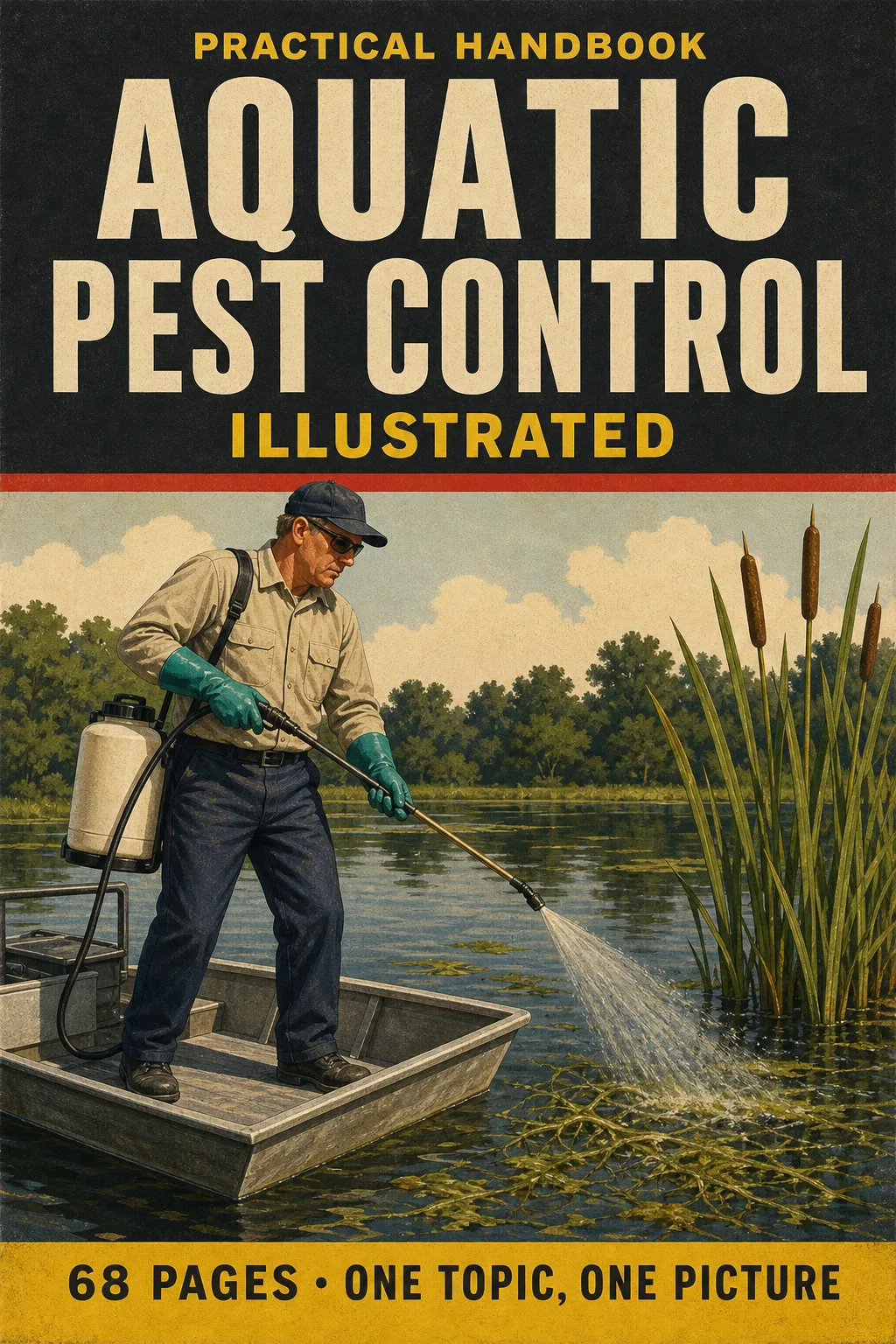
The Aquatic Category Exam, Illustrated: Name the Weed Group and Run the Pond Math in the Same Order Every Time One Topic on Every Page

Hydrilla vs elodea vs egeria, the four plant groups, acre-feet, the 2.7 rule (1 ppm in 1 acre-foot ≈ 2.7 lb), contact vs systemic herbicides, grass carp and water-use restrictions. One topic per page: the drawing first, then the numbers and rules to remember. 68 illustrated pages.

START STUDYING THIS WAY

🔒 Secure checkout · PDF by email · 30-day guarantee

Every topic, its own pageEvery weed and every pond calculation drawn, with the explanation right beside it
68 illustrated pages9 parts, from the aquatic category and the label to the before-you-treat checklist
Up-to-date sourcesEPA 40 CFR Part 171, state aquatic category manuals and FIFRA label language
PDF by emailFormat

Look Inside the Book

Every page has one big drawing and a box with the numbers, rules and steps you need to know:

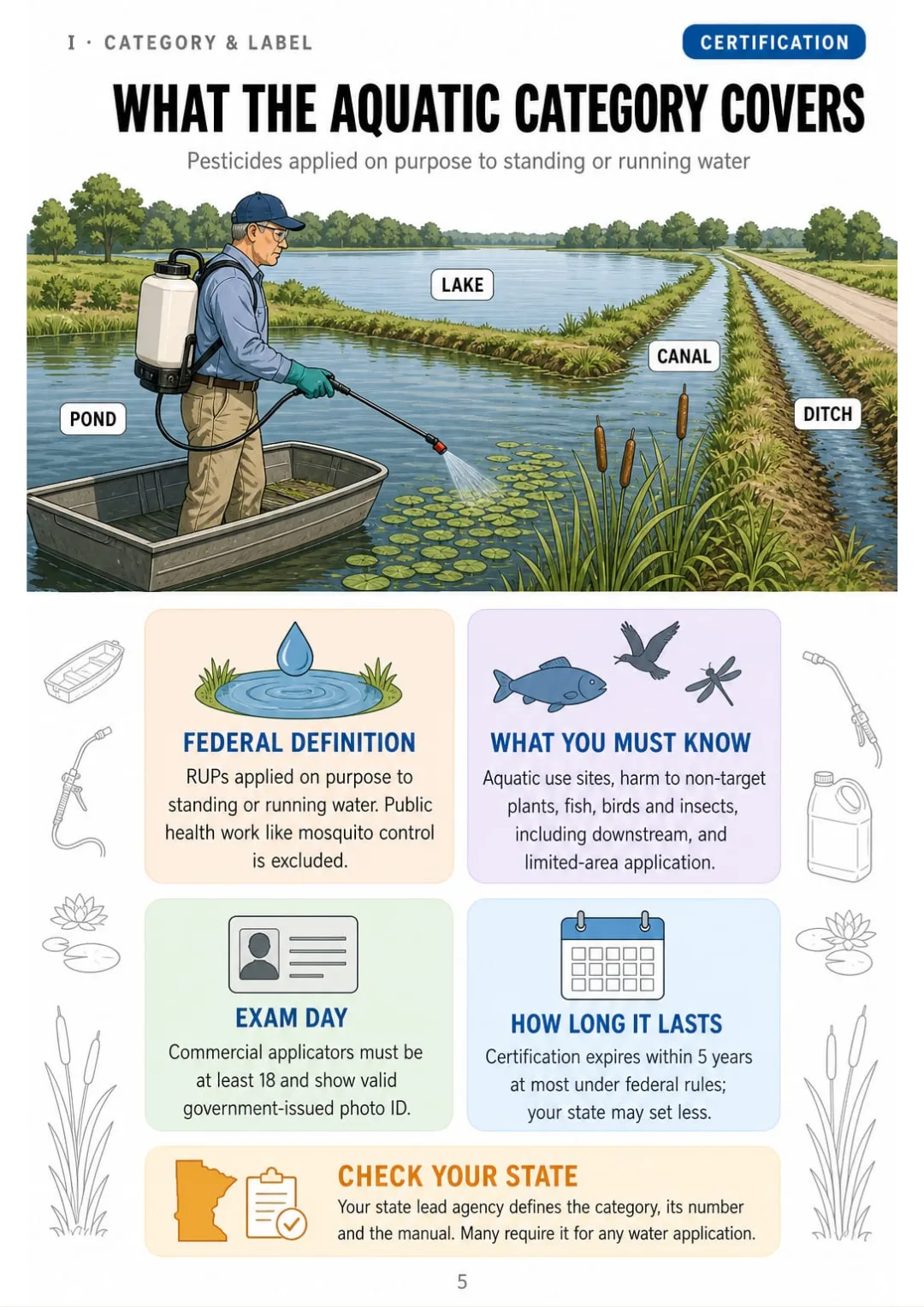
Aquatic category: RUPs applied to standing or running water, age 18+, photo ID, 5 years max.
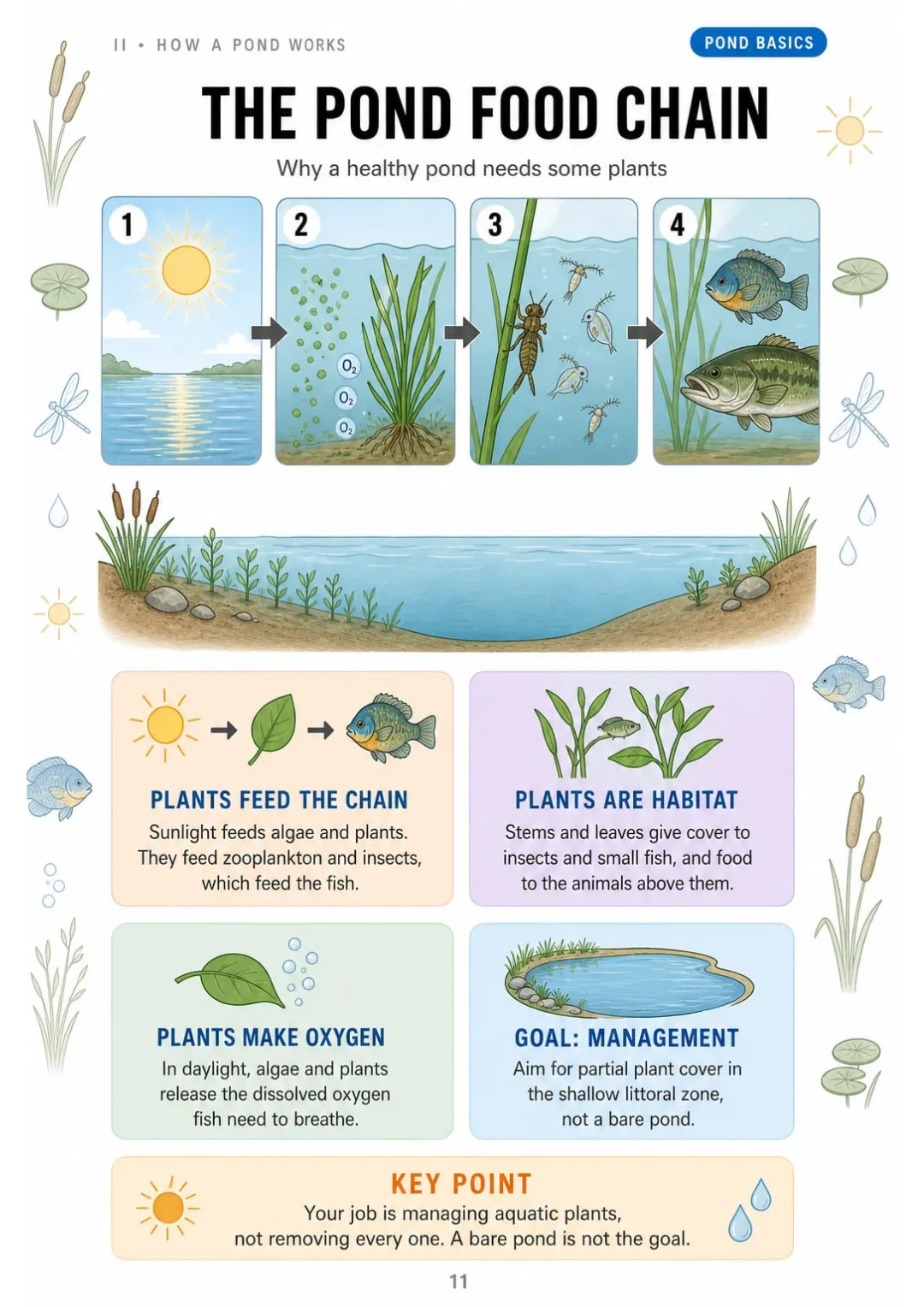
Sun → algae and plants → zooplankton and insects → fish: plants are habitat and oxygen.
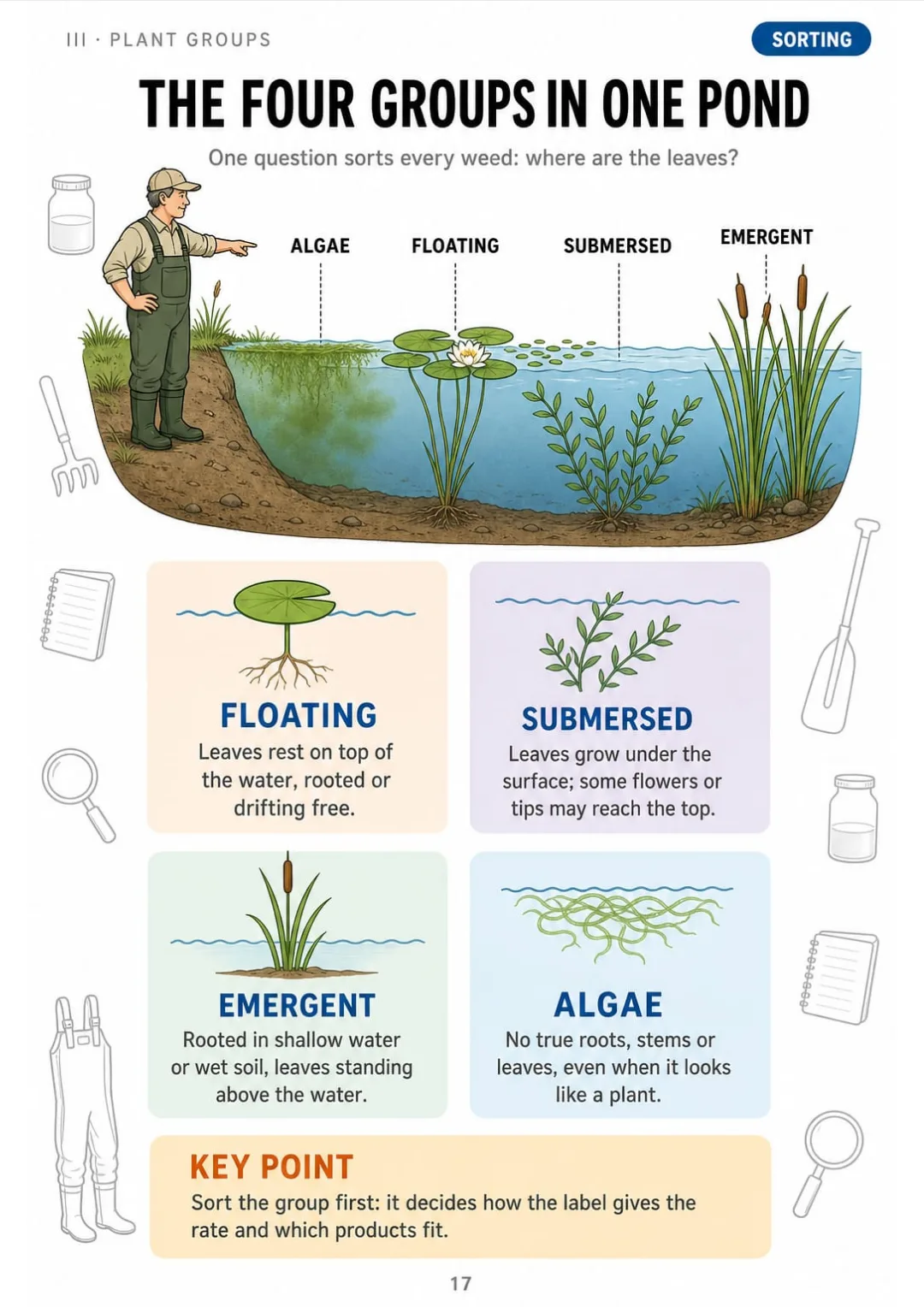
Algae, floating, submersed, emergent: one pond, one question, four groups.
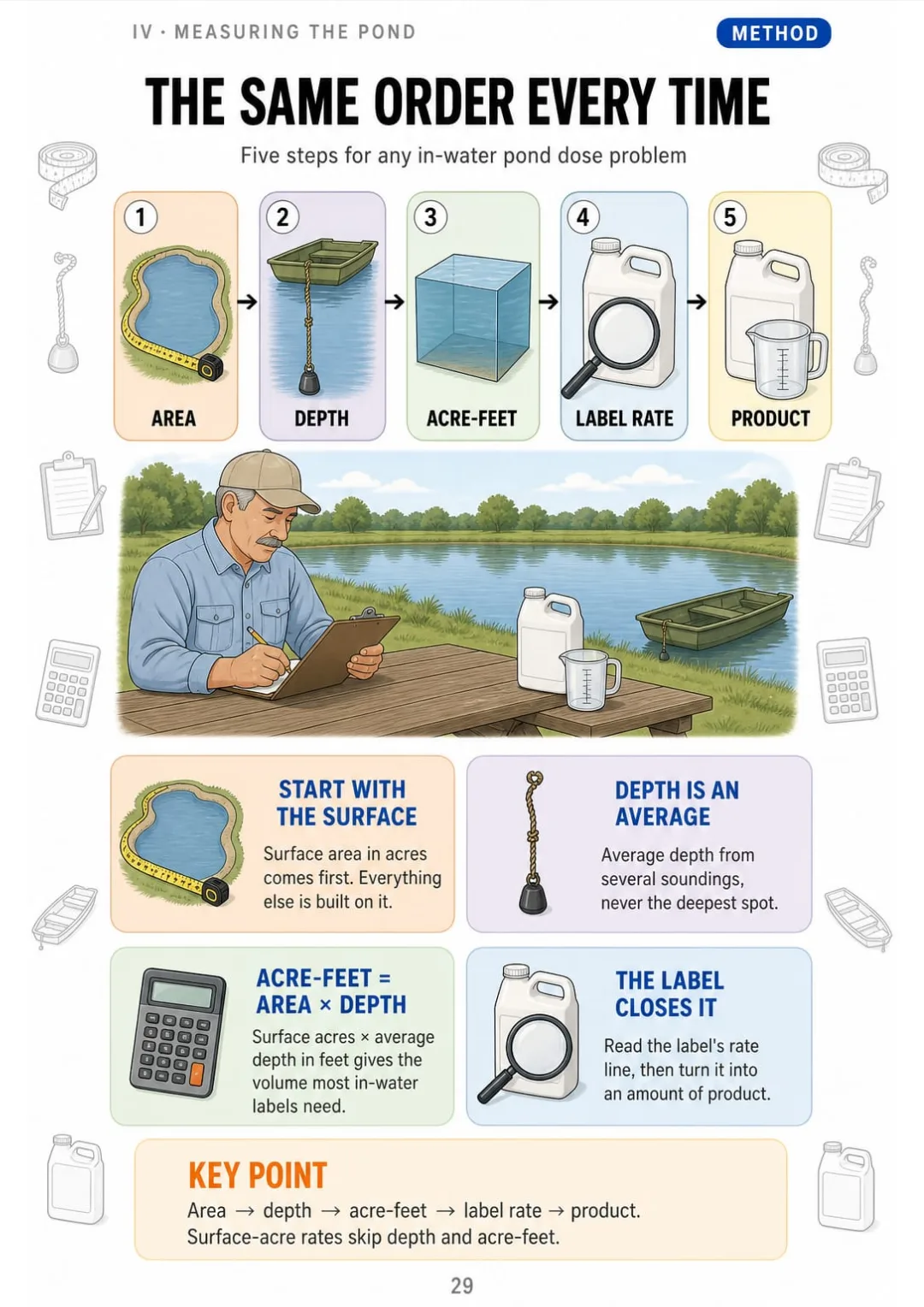
Area → average depth → acre-feet → label rate → product: the five-step strip for any pond.
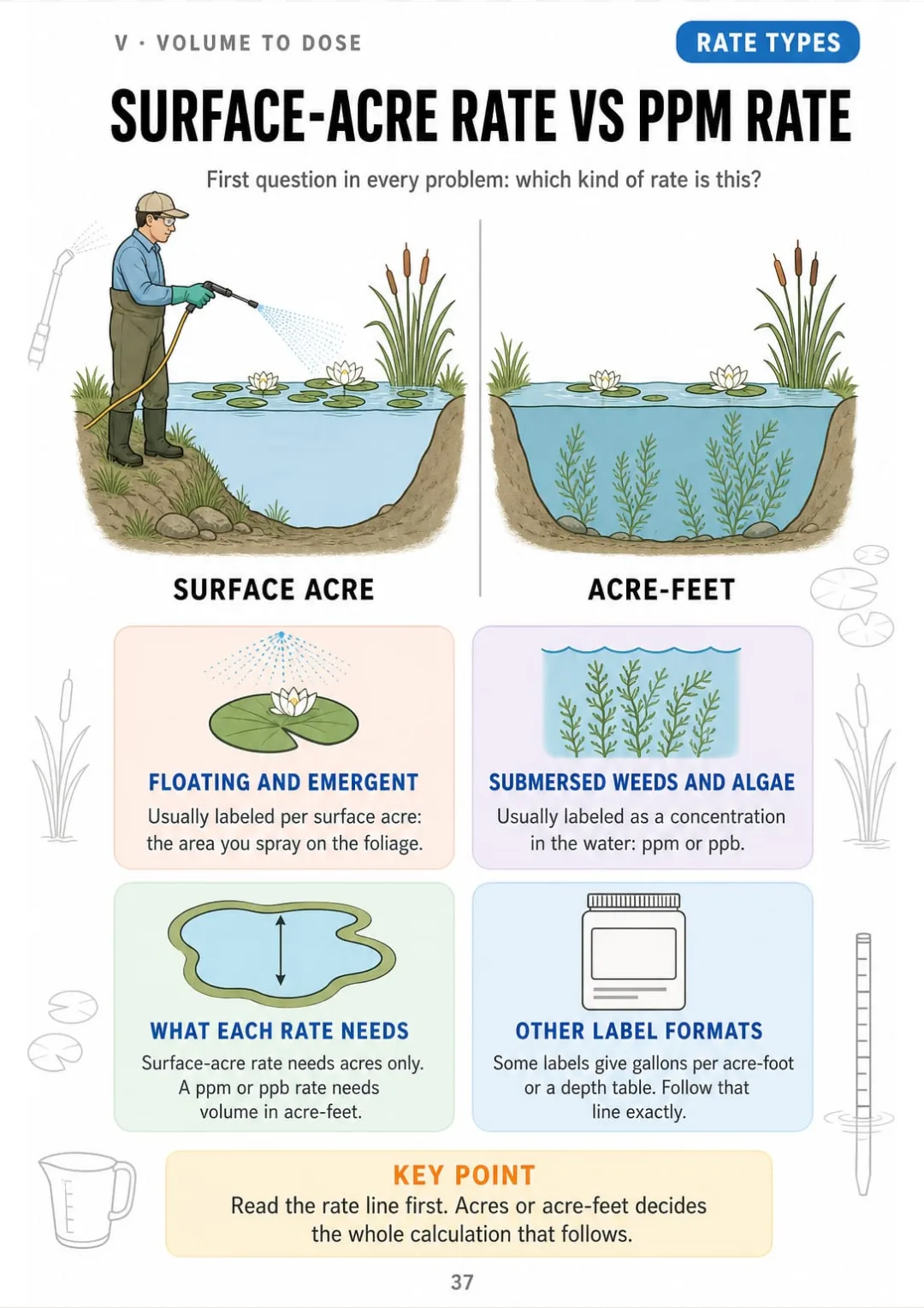
Floating and emergent weeds: per surface acre. Submersed weeds and algae: ppm in acre-feet.
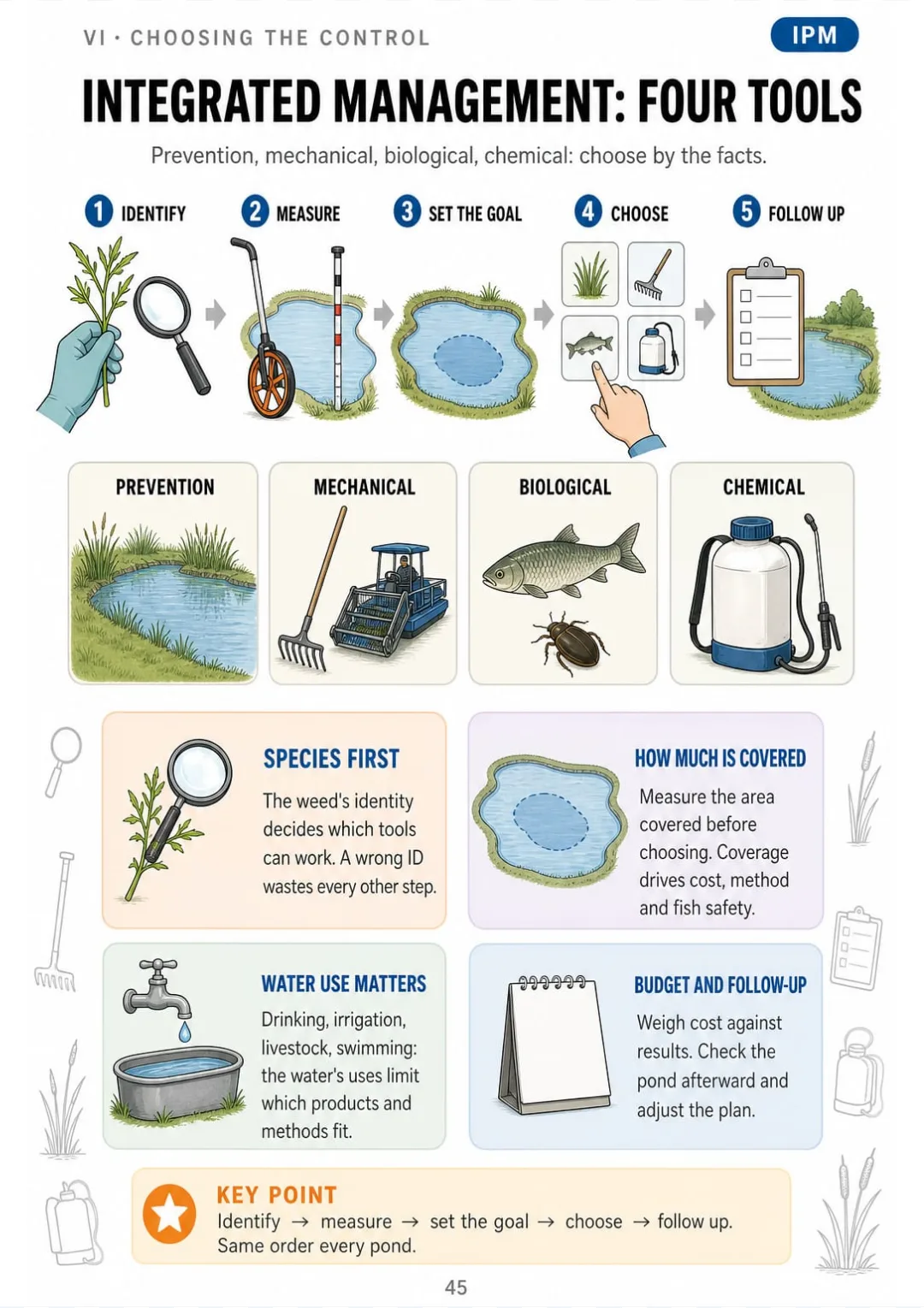
Four tools, five steps: identify → measure → set the goal → choose → follow up.
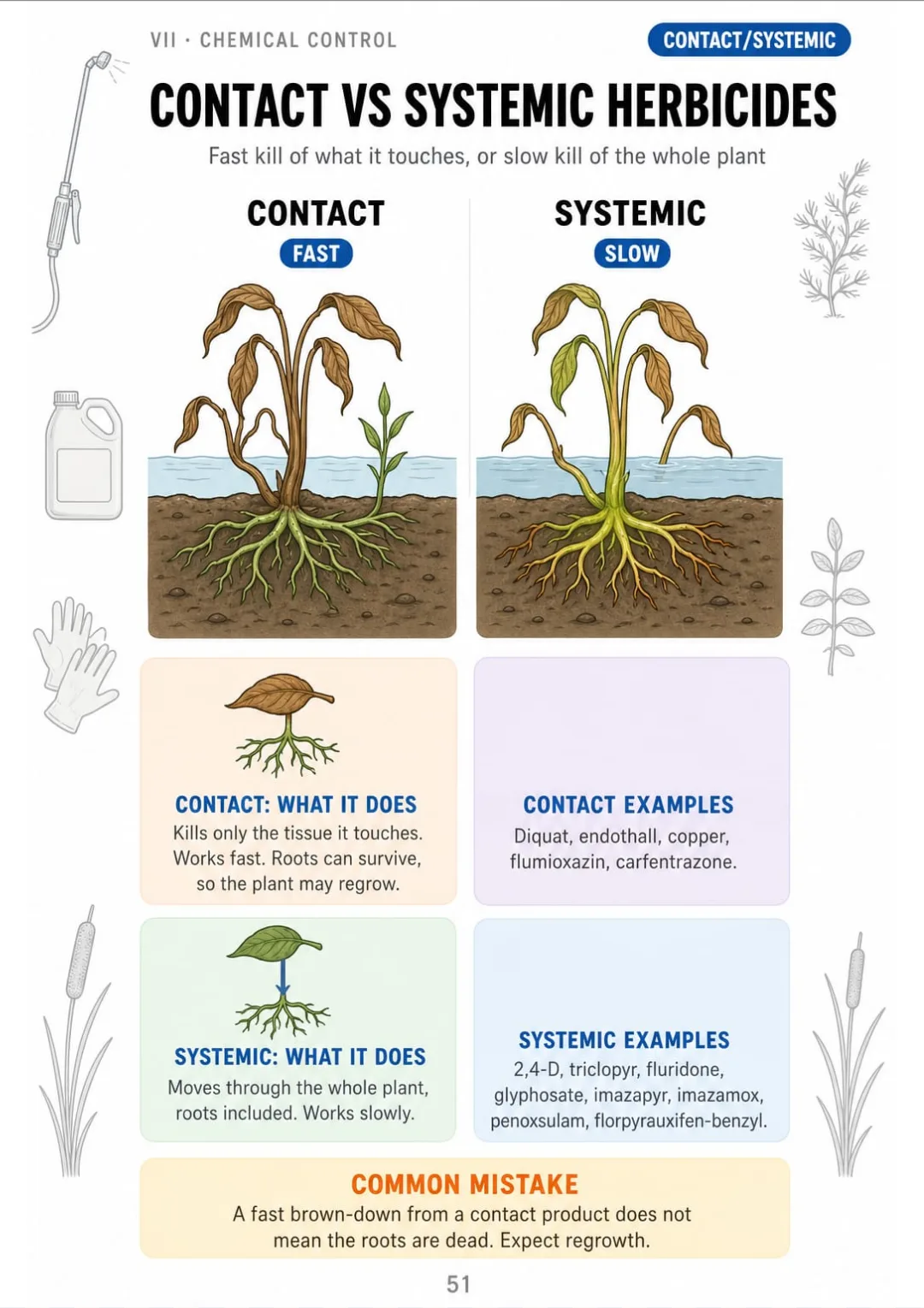
Contact: diquat, endothall, copper. Systemic: 2,4-D, triclopyr, fluridone, glyphosate and more.
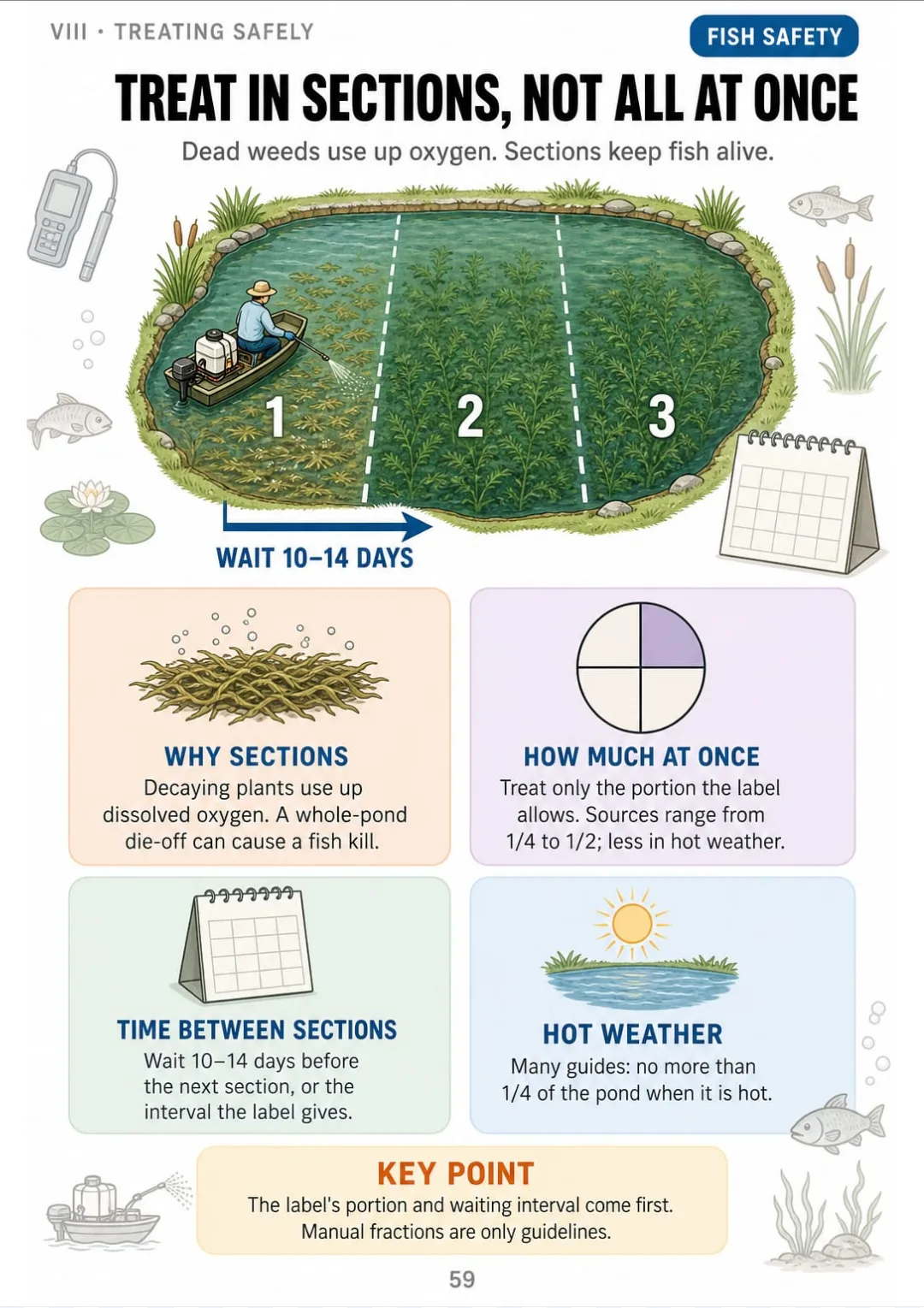
Treat part of the pond, wait 10–14 days, then the next section.

Swipe to see more →

These are real pages from the book. The table of contents is the full one: 9 parts and 64 topics.

The Problem Isn't You. It's How It Was Explained to You.

You're at the edge of a client's pond with a rake full of green growth, and the first question is simple: what group is this? Algae, floating, submersed or emergent.

The manual covers the four groups in page after page of paragraphs, one after the other. Read back to back, they blur together, and the group is what decides the rate line, the product and the timing.

Algae, floating, submersed, emergent: one pond, one question, four groups.

In this book it's one page: one pond, drawn with the four groups in their place. Algae in the water, floating plants on the surface, submersed plants below it, emergents along the shoreline. One question, four answers.

Same with hydrilla vs elodea vs egeria, acre-feet, the 2.7 rule, contact vs systemic herbicides and water-use restrictions: each one has its own page.

You see the group, you know which way to treat it, and you get on with the job without going back to the manual.

COMPARE FOR YOURSELF

Same Topic, Two Ways to Study It

THIS
  • The manual: line after line after line
  • Acre-feet and ppm explained only in words
  • You walk into the exam second-guessing yourself
To determine the quantity of herbicide required for an in-water application, the applicator must first establish the surface area of the water body, expressed in acres, and its mean depth, derived from a series of soundings taken at regular intervals. The product of these two values yields the volume in acre-feet. Since one acre-foot of water weighs approximately 2.72 million pounds, a concentration of one part per million corresponds to approximately 2.7 pounds of active ingredient per acre-foot; this figure must then be multiplied by the target concentration and converted into a product quantity in accordance with the label.
FOR THIS
  • The pond drawn with its area and average depth
  • Acre-feet and the 2.7 rule in one box
  • You see it and you get it
Sun → algae and plants → zooplankton and insects → fish: plants are habitat and oxygen.
CONTENTS

Take a Look at the 9 Parts and 64 Topics

The aquatic category and the label, how a pond works, the four plant groups, measuring the pond, from volume to dose, choosing the control, chemical control, treating safely and review: 68 pages, all illustrated

IThe Aquatic Category and the Label · pp. 5-10
  1. What the Aquatic Category Covers
  2. The Label Is the Law
  3. Reading the Rate Line on an Aquatic Label
  4. Restricted Use vs General Use
  5. The NPDES Pesticide General Permit
  6. Endangered Species and Sensitive Areas
IIHow a Pond Works · pp. 11-16
  1. The Pond Food Chain on One Page
  2. Pond Zones: Littoral, Open Water, Bottom
  3. Dissolved Oxygen Through the Day
  4. Stratification and Turnover
  5. Nutrients: Why Weeds Keep Coming Back
  6. Water Chemistry That Changes a Treatment
IIIThe Four Plant Groups and the Weeds · pp. 17-28
  1. The Four Groups Side by Side
  2. Algae: Planktonic, Filamentous, Macroalgae
  3. Chara vs Nitella
  4. Blue-Green Algae and Harmful Blooms
  5. Free-Floating Plants: Duckweed, Watermeal, Salvinia
  6. Water Hyacinth vs Water Lettuce
  7. Rooted Floating-Leaved: Water Lilies, Spatterdock, Watershield
  8. Hydrilla vs Elodea vs Egeria
  9. Eurasian Watermilfoil vs Northern Milfoil vs Coontail
  10. Pondweeds and Naiads
  11. Emergent Plants: Cattail, Phragmites, Bulrush
  12. Invasive Emergents: Purple Loosestrife and Alligatorweed
IVMeasuring the Pond · pp. 29-36
  1. The Same Order Every Time
  2. Units You Need Memorized
  3. Surface Area of a Rectangle or Square Pond
  4. Surface Area of a Round Pond
  5. Surface Area of a Triangle or Irregular Pond
  6. Average Depth: How to Sound a Pond
  7. Acre-Feet: Area × Average Depth
  8. Flowing Water: Canals and Ditches
VFrom Volume to Dose · pp. 37-44
  1. Surface-Acre Rate vs ppm Rate
  2. The 2.7 Rule
  3. Worked Problem: Pounds of Active Ingredient
  4. From Active Ingredient to Product
  5. Copper Sulfate: Metallic Copper vs Product
  6. Working in ppb
  7. Spot Treatment and Dilution
  8. Sprayer Calibration: The 1/128 Acre Method
VIChoosing the Control · pp. 45-50
  1. Integrated Management: Four Tools
  2. Prevention: Nutrients, Buffers, Clean-Drain-Dry
  3. Mechanical Control: Raking, Harvesters, Barriers
  4. Drawdown
  5. Grass Carp
  6. Insect Biocontrol
VIIChemical Control · pp. 51-58
  1. Contact vs Systemic
  2. Foliar Products for Emergent and Floating Weeds
  3. In-Water Products for Submersed Weeds
  4. Copper Products and Algaecides
  5. Diquat and Endothall: What Changes the Result
  6. Formulations and Additives
  7. Application Equipment on the Water
  8. Herbicide Resistance and Rotation
VIIITreating Safely and Water Use · pp. 59-64
  1. Treat in Sections to Protect Fish
  2. Timing: Spring vs Hot Summer
  3. Water-Use Restrictions
  4. Irrigation Intakes and Downstream Water
  5. PPE, Mixing and Loading Near Water
  6. Spills, Fish Kills and Records
IXReview and Practice · pp. 65-68
  1. Look-Alikes on One Page
  2. All the Pond Formulas on One Page
  3. Three Practice Problems, Solved Step by Step
  4. Before-You-Treat Checklist

One Page, One Topic, All Clear

Think of it this way:

A client calls: the pond is choked with a submersed weed and you need to know how much product goes in. First you need the volume in acre-feet, and it has to be right.

In the book you open the acre-feet page and see the pond drawn with its surface area, its average depth and the multiplication between them: area × average depth, in the same order every time.

Floating and emergent weeds: per surface acre. Submersed weeds and algae: ppm in acre-feet.

Same with the four plant groups, hydrilla vs elodea vs egeria, the 2.7 rule, contact vs systemic herbicides and treating in sections: each one on its own page.

Aquatic Pest Control Illustrated is 9 parts and 64 topics, all drawn, and at the end you get the look-alikes and every pond formula on one page, three practice problems solved step by step and a before-you-treat checklist.

What you see drawn, you don't have to memorize.

What's Inside Aquatic Pest Control Illustrated:

Ipp. 5-10

The Aquatic Category and the Label

What the aquatic category covers, why the label is the law, the rate line, restricted vs general use, the NPDES permit and sensitive areas.

IIpp. 11-16

How a Pond Works

The pond food chain, the pond zones, dissolved oxygen through the day, stratification and turnover, nutrients and the water chemistry that changes a treatment.

IIIpp. 17-28

The Four Plant Groups and the Weeds

The four groups side by side, the algae, Chara vs Nitella, harmful blooms, floating plants, lilies, hydrilla vs elodea vs egeria, milfoils, pondweeds and the emergents.

IVpp. 29-36

Measuring the Pond

The same five steps every time, the units to know, the surface area of any pond shape, sounding for average depth, acre-feet and flowing water.

Vpp. 37-44

From Volume to Dose

Surface-acre vs ppm rates, the 2.7 rule, from active ingredient to product, copper sulfate, ppb, spot treatment and sprayer calibration.

VIpp. 45-50

Choosing the Control

Integrated management, prevention, mechanical control, drawdown, grass carp and insect biocontrol.

VIIpp. 51-58

Chemical Control

Contact vs systemic, foliar and in-water products, copper and algaecides, diquat and endothall, formulations, equipment on the water and rotation.

VIIIpp. 59-64

Treating Safely and Water Use

Treating in sections, spring vs hot summer, water-use restrictions, irrigation intakes, PPE near water, spills, fish kills and records.

IXpp. 65-68

Review and Practice

Look-alikes on one page, all the pond formulas on one page, three solved practice problems and a before-you-treat checklist.

At the end of the book: Look-alikes and all pond formulas on one page, 3 practice problems solved step by step and a before-you-treat checklist.
Plus: 2 Free Books

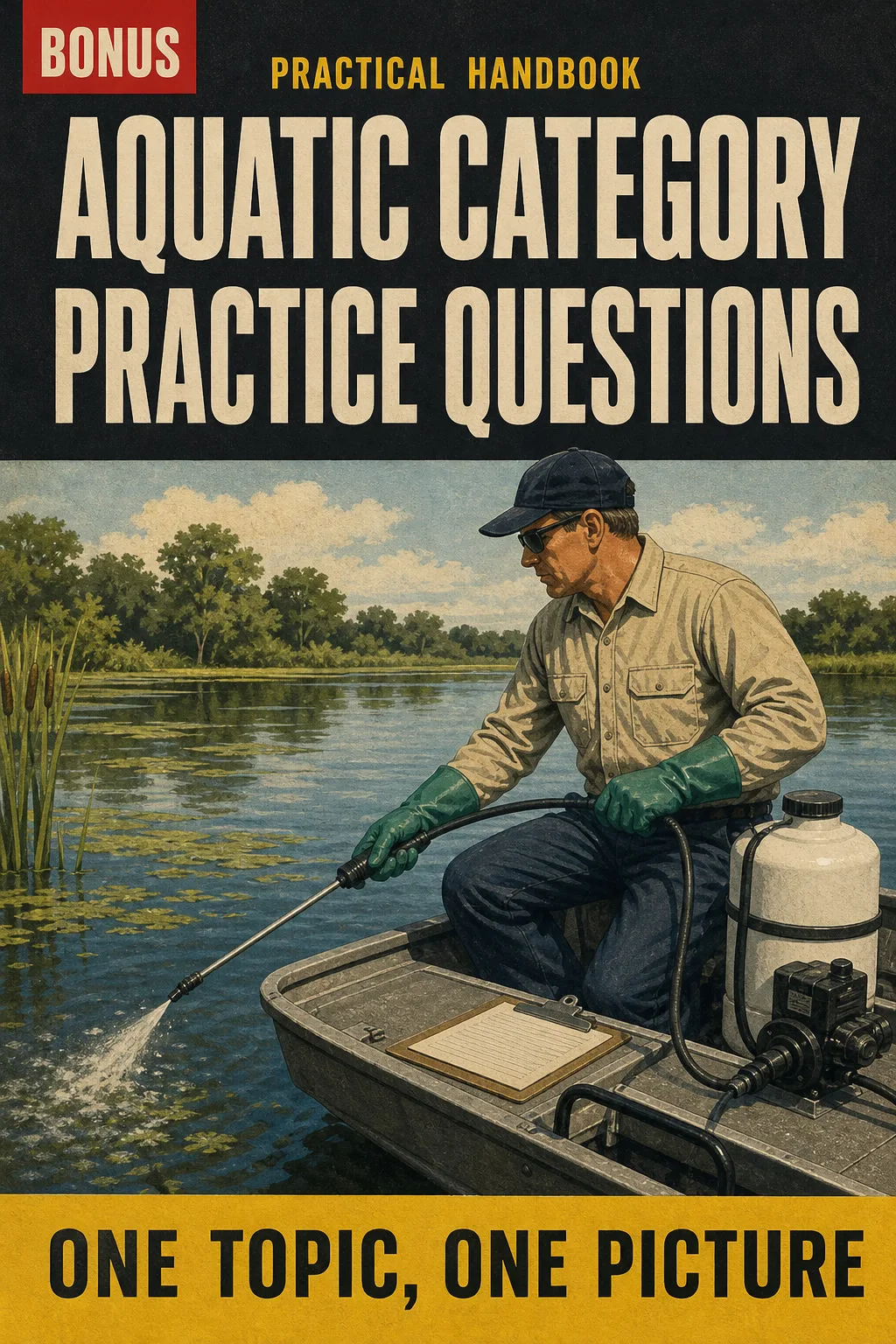
Aquatic Category Practice Questions

BONUS 1: «Aquatic Category Practice Questions»

Value on its own: US$ 17.90

Exam-style questions with the answer explained on the same page, so you find your weak spots before exam day, not during it.

BONUS 2The 15 Common Aquatic Treatment Mistakes

BONUS 2: «The 15 Common Aquatic Treatment Mistakes»

Value on its own: US$ 14.90

Each frequent mistake drawn before and after, from treating a whole pond in hot weather to skipping the irrigation restriction, so you can review them in one sitting.

Aquatic Pest Control Illustrated with 2 Free Books

  • Aquatic Pest Control Illustrated: 68 illustrated pagesUS$ 63
  • BONUS 1: Aquatic Category Practice QuestionsUS$ 17.90
  • BONUS 2: The 15 Common Aquatic Treatment MistakesUS$ 14.90
  • High-resolution PDF to printIncluded
Total value US$ 95.80
YOUR PRICE:
US$ 27
You save US$ 68.80
YES, I WANT AQUATIC PEST CONTROL ILLUSTRATED FOR US$ 27

📄 This is a digital PDF book sent to your email: nothing is printed or shipped.

Secure purchaseEncrypted payment30-day guarantee

PDF by email: We email you Aquatic Pest Control Illustrated as a PDF, together with the two free books. It's a single payment: no installments, no extra charges.

Who This Book Is For

You're studying the aquatic manual

You're studying the aquatic manual

Every weed, every pond zone and every formula on its own drawn page, so what you study tonight is still there tomorrow.

Your aquatic exam date is set

Your aquatic exam date is set

The four plant groups, the pond math in five steps and the water-use restrictions in order, plus practice questions to find your weak spots before exam day.

You already treat ponds

You already treat ponds

A printable book for the truck: the look-alikes side by side, the dose worked out the same way every time and the checklist before you treat.

Everything You Get Today

US$ 95.80US$ 27
YES, I WANT AQUATIC PEST CONTROL ILLUSTRATED FOR US$ 27

📄 This is a digital PDF book sent to your email: nothing is printed or shipped.

30DAYS
GUARANTEE

30-Day Guarantee

Try Aquatic Pest Control Illustrated for 30 days, bonus books included.

We refund everything if the file won't open, if the book isn't what you see here, if you were charged twice or if the email doesn't arrive. Just email us.

You pay once. No subscriptions.

Frequently Asked Questions

Is it for me if I already work on ponds and need the aquatic category on my license?

Yes. It's written for applicators who already do the field work, under supervision or adding the aquatic category to their license. It isn't a beginner's book: it covers surface-acre vs ppm rates, ppb, flowing water, sprayer calibration and treating in sections. It follows the content common to state aquatic category manuals, which are built on the EPA standards (40 CFR Part 171). Category numbers and some rules change from state to state, so check your own state's manual for its category number and any state-specific requirements.

Where does the content come from?

From the EPA applicator certification standards (40 CFR Part 171), the aquatic category study manuals used by state lead agencies and Cooperative Extension, FIFRA label language and the NPDES Pesticide General Permit.

Is it official material?

No. It's an independent illustrated study book. It isn't issued or endorsed by the EPA, any state agency or any manufacturer, and it doesn't give you a license, a certificate or continuing education credits: those come only from your state's exam and approved courses.

Does it replace the official manual or the required training?

No. It helps you study and review what's in them, with drawings. Every dose calculation shows each step with its units, so you can check it line by line, and it uses the standard conversions from Extension aquatic manuals (1 acre-foot = 43,560 cubic feet; 1 ppm in 1 acre-foot ≈ 2.7 lb). They are study exercises: in the field, your state's rules and the product label always come first. The label is the law.

Are the practice questions the ones on the exam?

No. They're written for this book, exam-style, with the answer explained. They are not official questions from any exam.

When and how do I get it?

The book and the 2 bonus books come as a PDF by email, to the address you enter at checkout.

Do I have to pay every month?

No. It's a one-time payment. No subscription.

Can I have it on paper?

Yes. The PDF is printable: print the whole book or just the pages you want to keep in the truck or the boat.

How does the refund work?

You have 30 days. We refund everything if the file won't open, if the book isn't what you see on this page, if you were charged twice or if the email doesn't arrive: just email us.

Before You Close This Page

No more rereading with nothing sticking.

Hydrilla, elodea and egeria: you see them drawn side by side.

You walk into the exam knowing where everything is.

Drawings make studying faster.

The book is right below.

One-time payment: US$ 27 · Guarantee: 30 days · PDF by email

YES, I WANT AQUATIC PEST CONTROL ILLUSTRATED FOR US$ 27

📄 This is a digital PDF book sent to your email: nothing is printed or shipped.